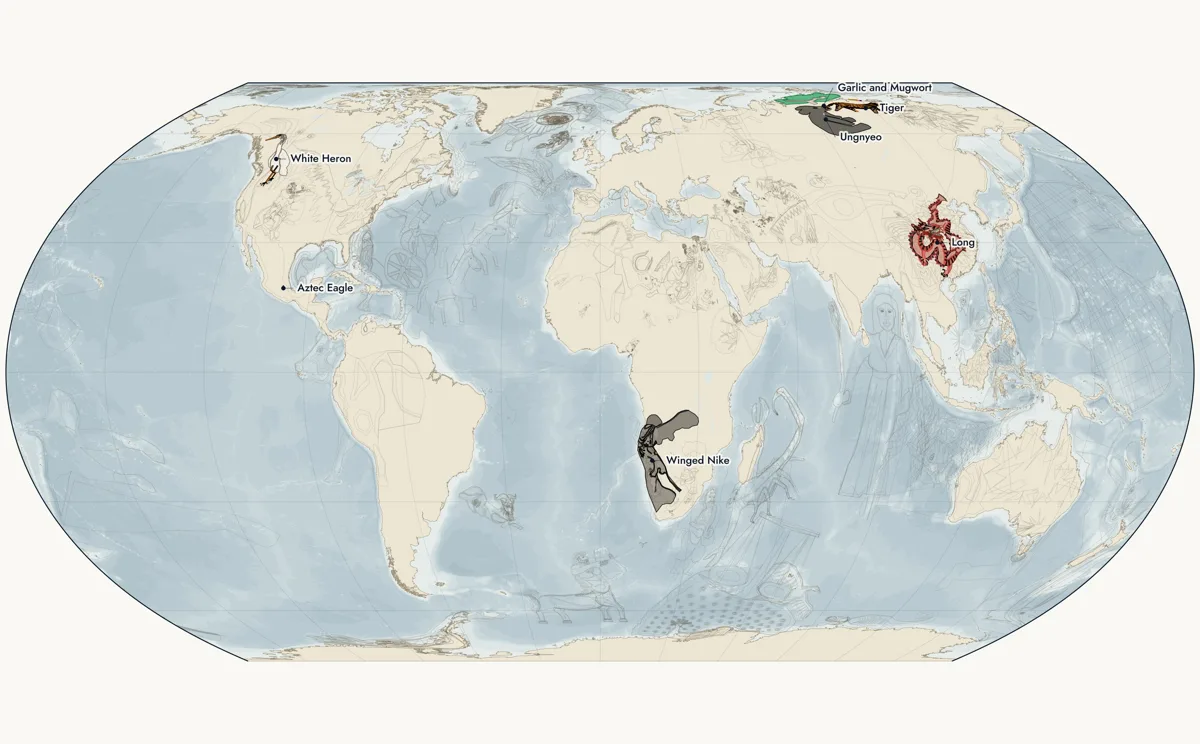
Cycle 1
Korean, Aztec and Chinese
The Dangun founding story with Ungnyeo the bear-woman, Long the Chinese dragon, the white heron, the Aztec eagle and a winged Nike.
10 works · 406 placemarks · 6,783 vertices
The Source Corpus · Catalogue and Atlas
As Above, So Below — A Cultural-Cartographic Corpus
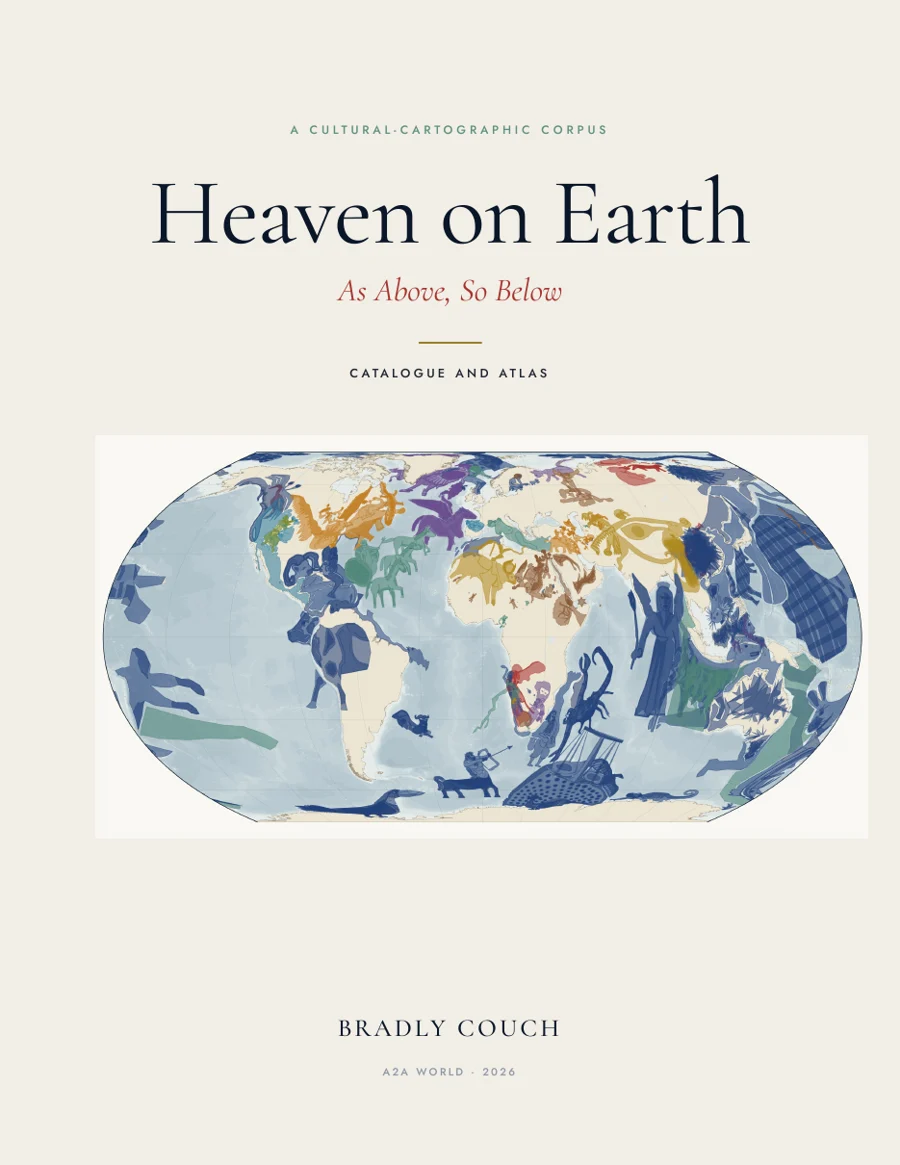
For most of human history people have looked at the sky and found stories in it. Heaven on Earth turns that habit around: it looks down at the planet, through satellite imagery, and finds the same stories written into coastlines, mountain ranges, ice fields and the floor of the sea.
This first edition catalogues the whole body of work by Bradly Couch — every cycle, every figure and the method behind them — in 75 illustrated pages.
First edition, 2026 · 75 pages · PDF, about 24 MB
8,213
placemarks
149,410
traced vertices
216
works
9
cycles
The Whole Corpus
Over several years, figures from the world’s mythologies have been traced directly onto the surface of the Earth, one shape at a time, with each line recorded as a geographic coordinate. The map below shows every placemark in the corpus at once.
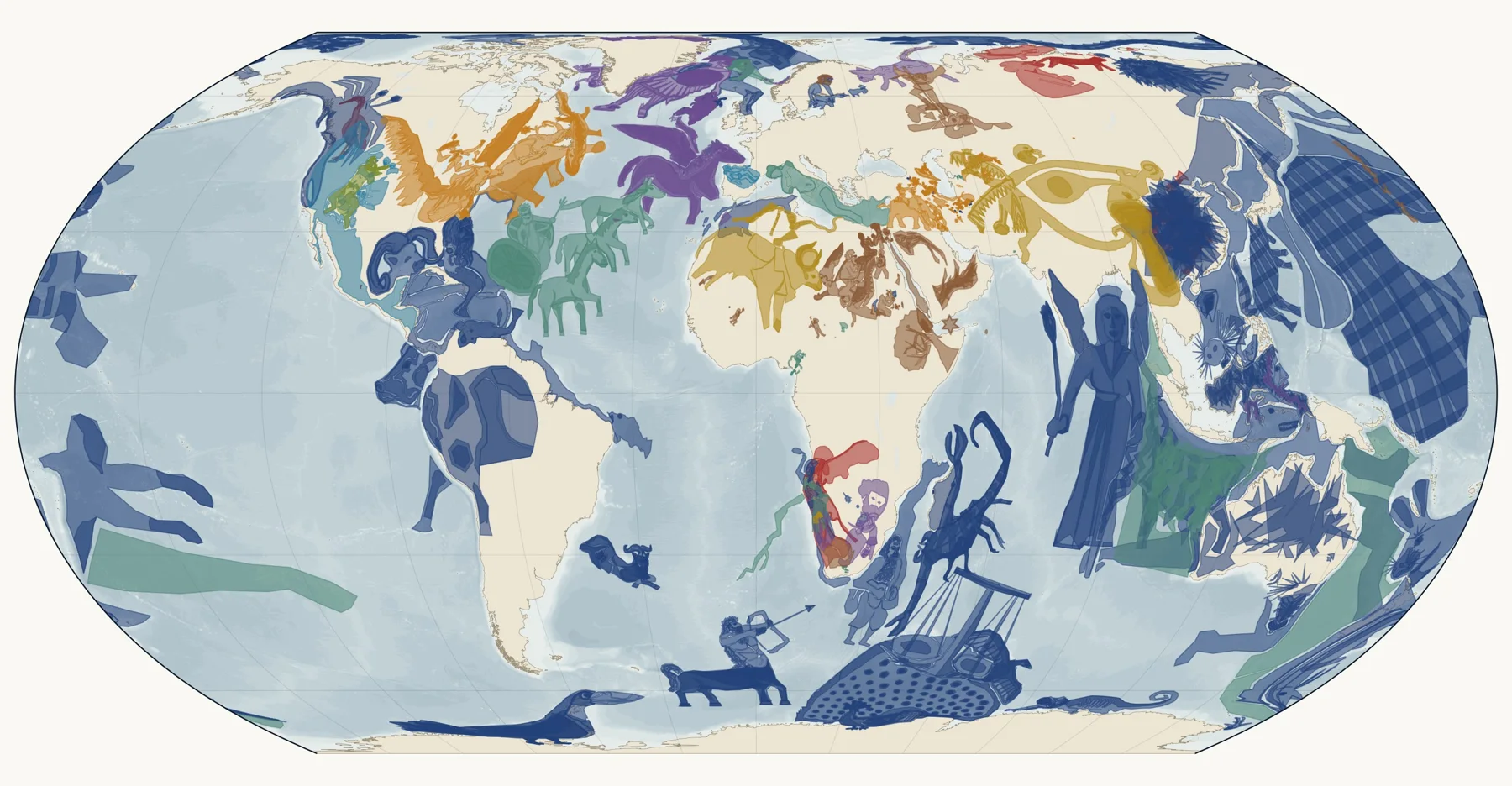
Nine Cycles
Cycle 1
The Dangun founding story with Ungnyeo the bear-woman, Long the Chinese dragon, the white heron, the Aztec eagle and a winged Nike.
10 works · 406 placemarks · 6,783 vertices
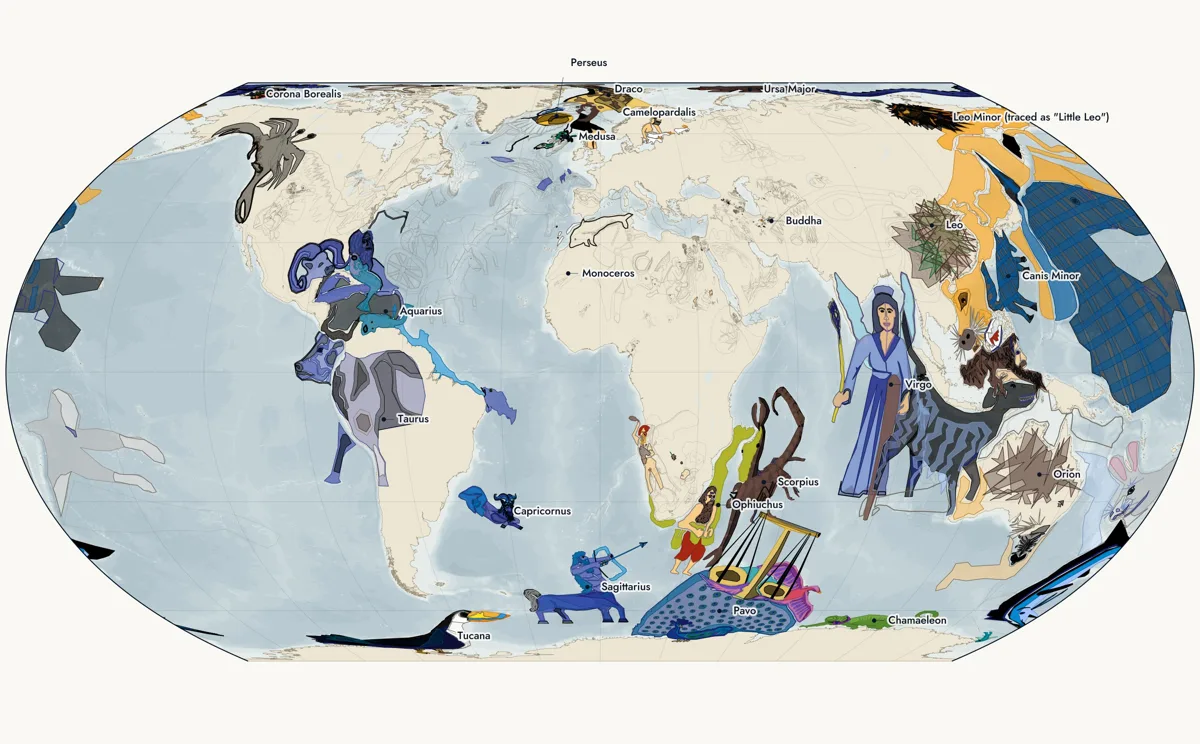
Cycle 2
The planet read as a second sky: Pavo, Draco, Scorpius, Corona Borealis, Capricornus, Sagittarius and more.
65 works · 2,558 placemarks · 41,525 vertices
Cycle 3
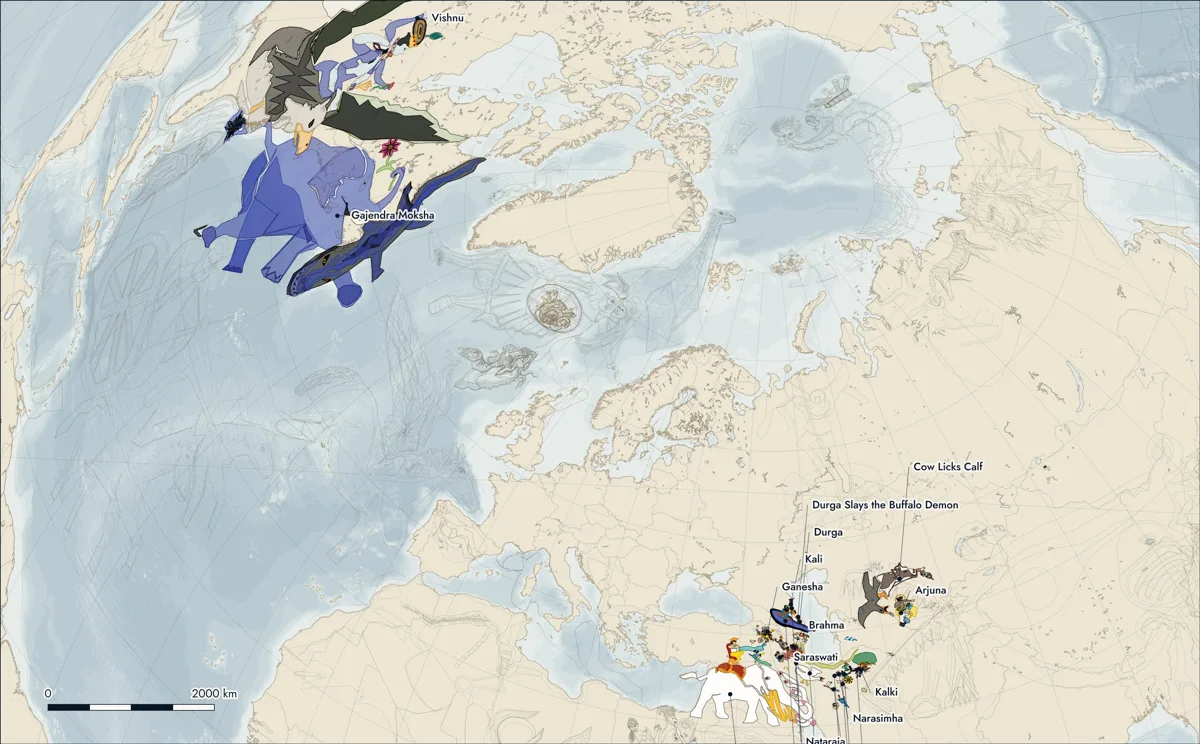
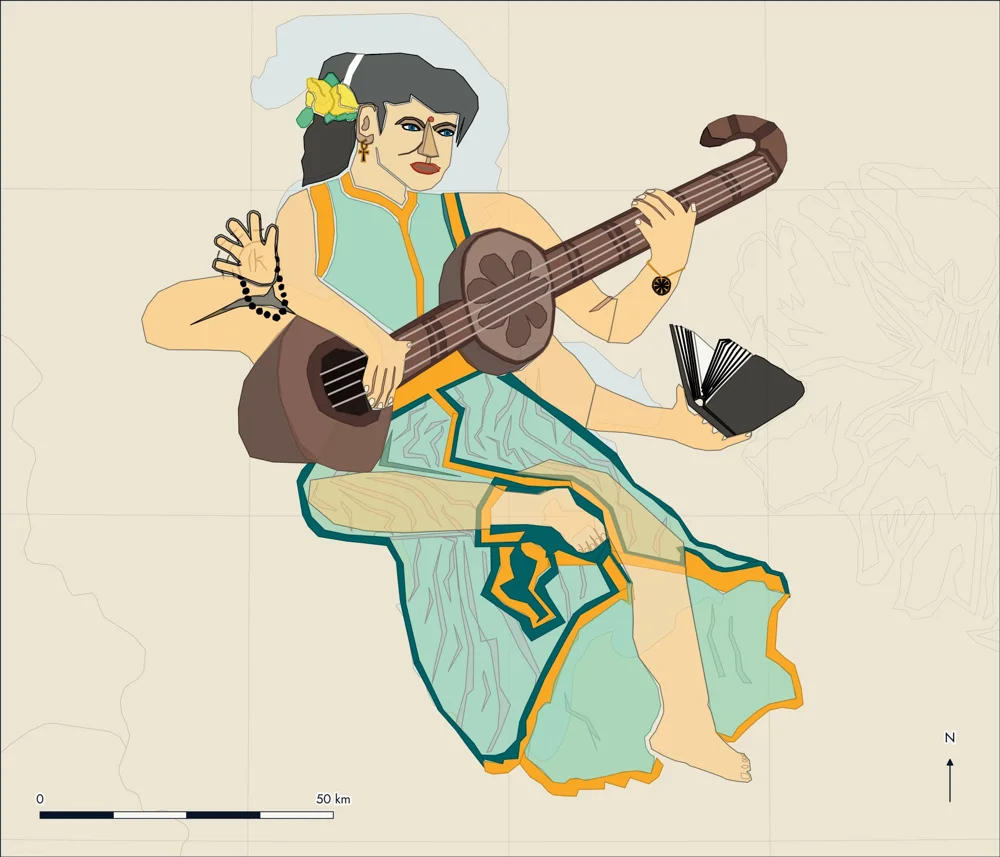
Concentrated around Lake Urmia and the Iranian plateau: Saraswati, Brahma, the ten avatars, Nataraja, the Churning of the Ocean and Gajendra.
56 works · 2,265 placemarks · 43,863 vertices
Cycle 4
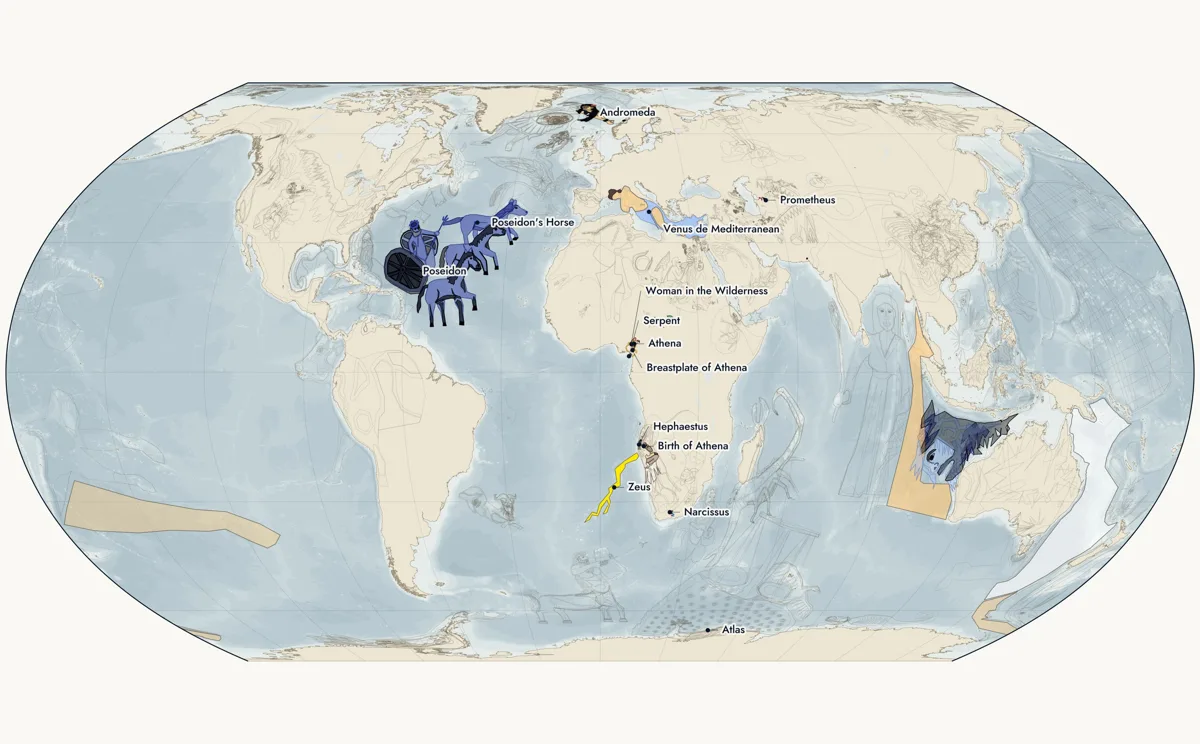
Figures of the Greek pantheon, among them the Birth of Athena.
19 works · 660 placemarks · 12,853 vertices
Cycle 5
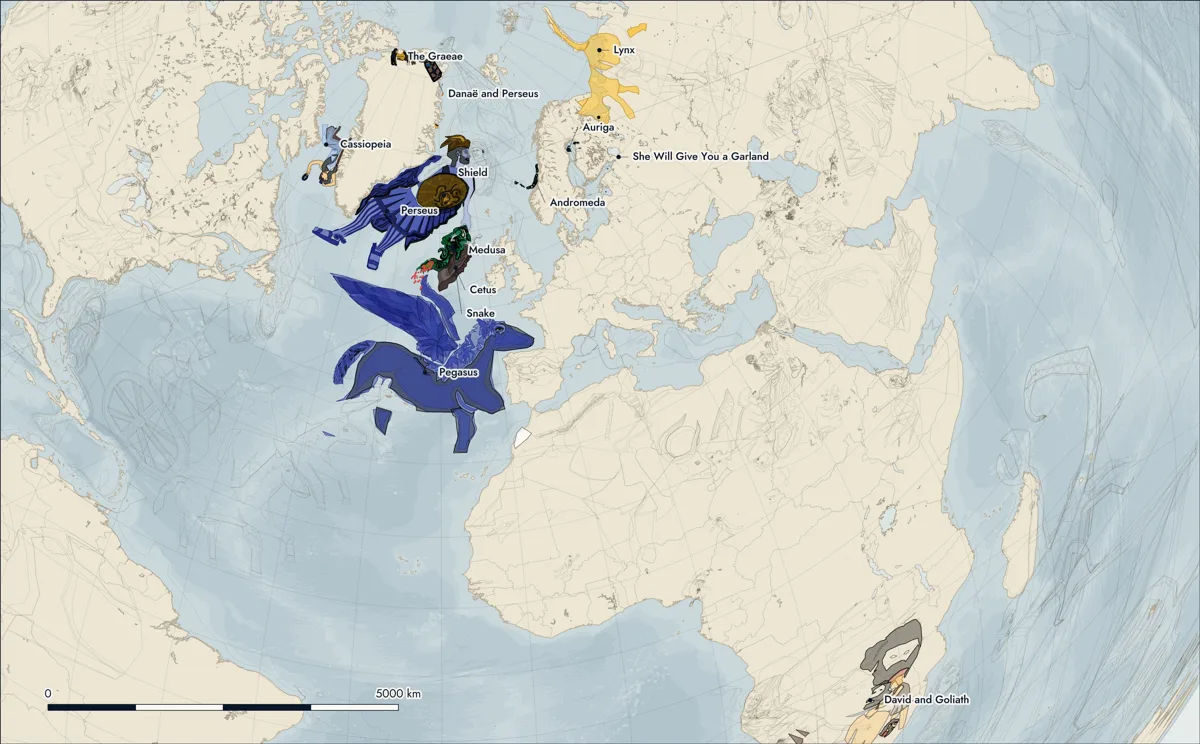
The Perseus story told as one connected sequence across the land.
17 works · 1,061 placemarks · 16,099 vertices
Cycle 6
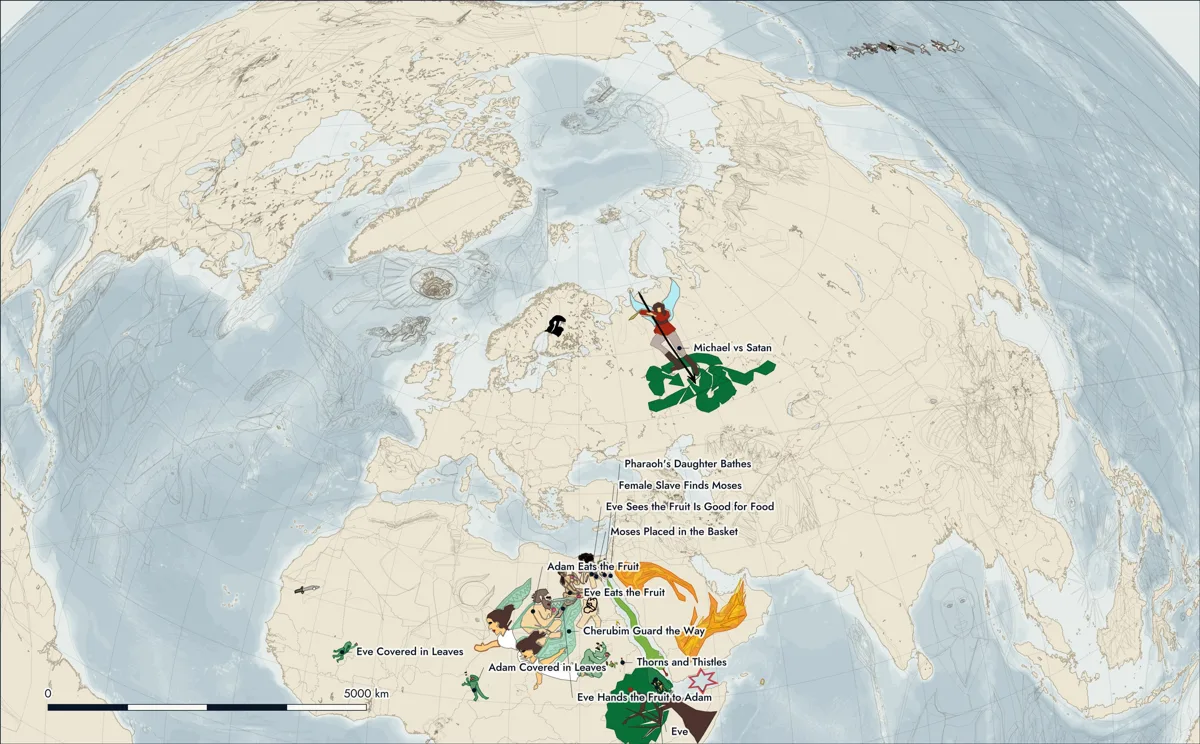
Scenes and figures including Moses, Michael, the Cherubim, the Judgement and the Pietà.
33 works · 652 placemarks · 13,175 vertices
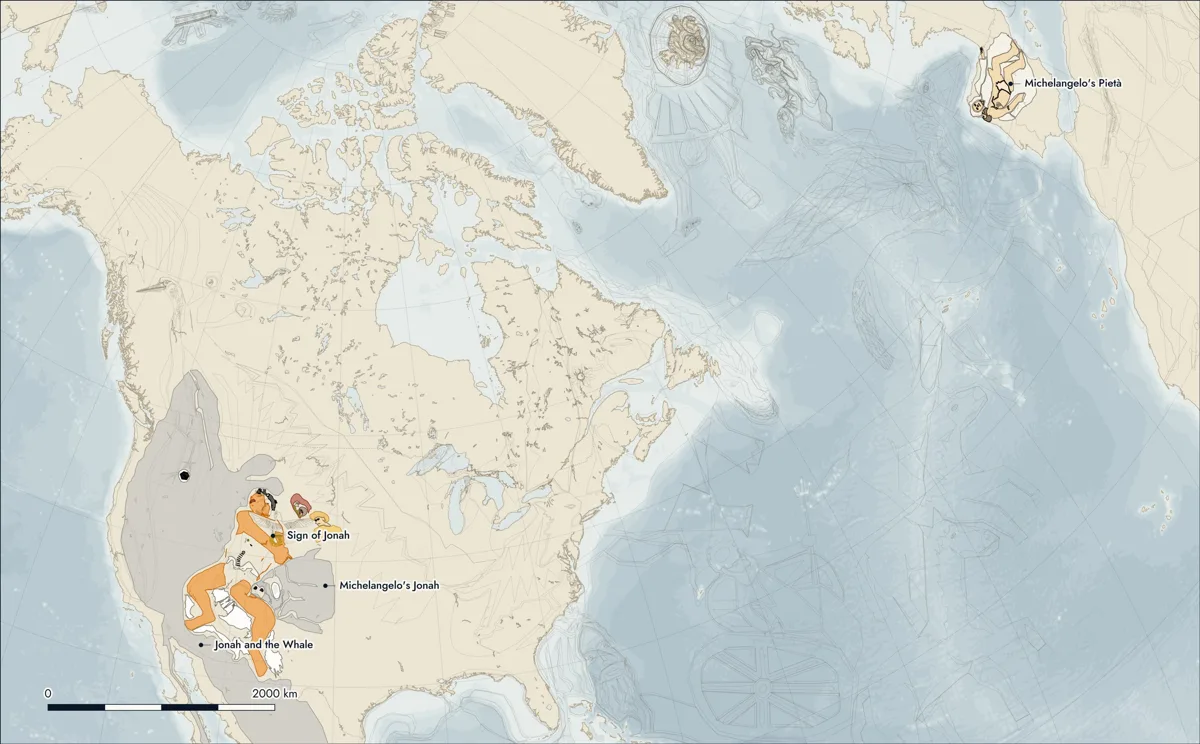
Cycle 7
Drawn from Michelangelo’s Jonah.
4 works · 187 placemarks · 6,324 vertices
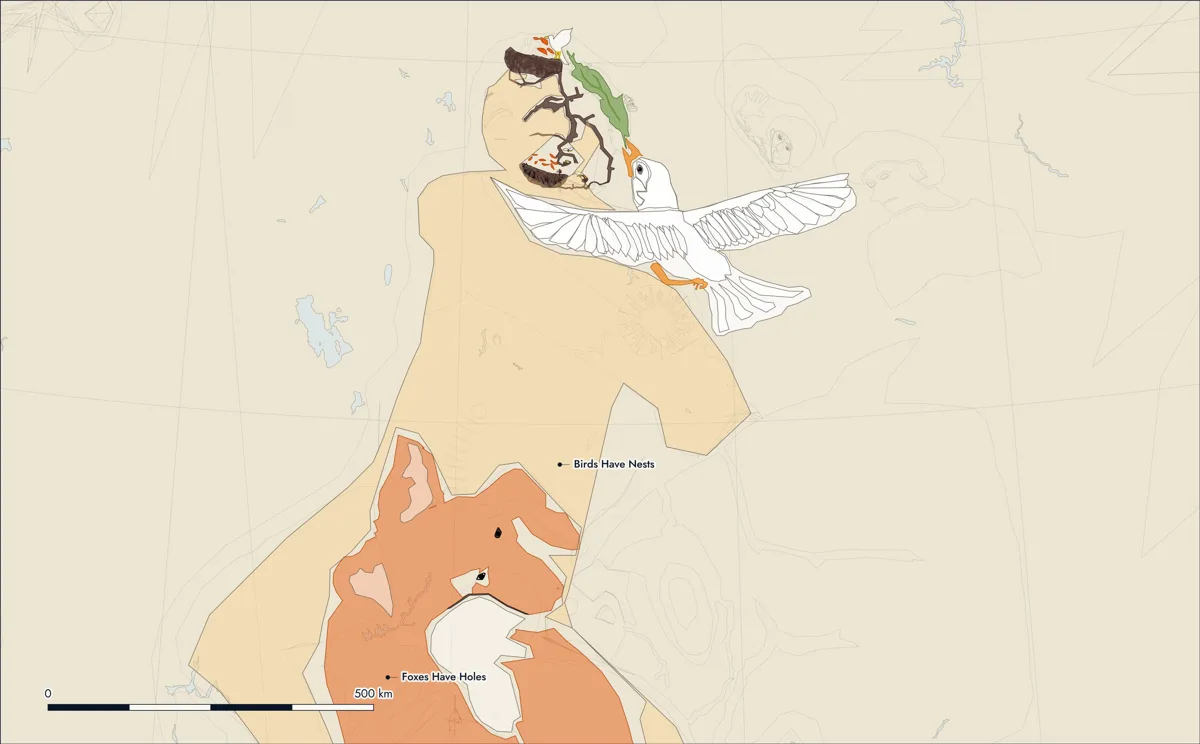
Cycle 8
Drawn from a single Gospel saying: the birds of the air and the foxes of the field.
2 works · 191 placemarks · 4,047 vertices
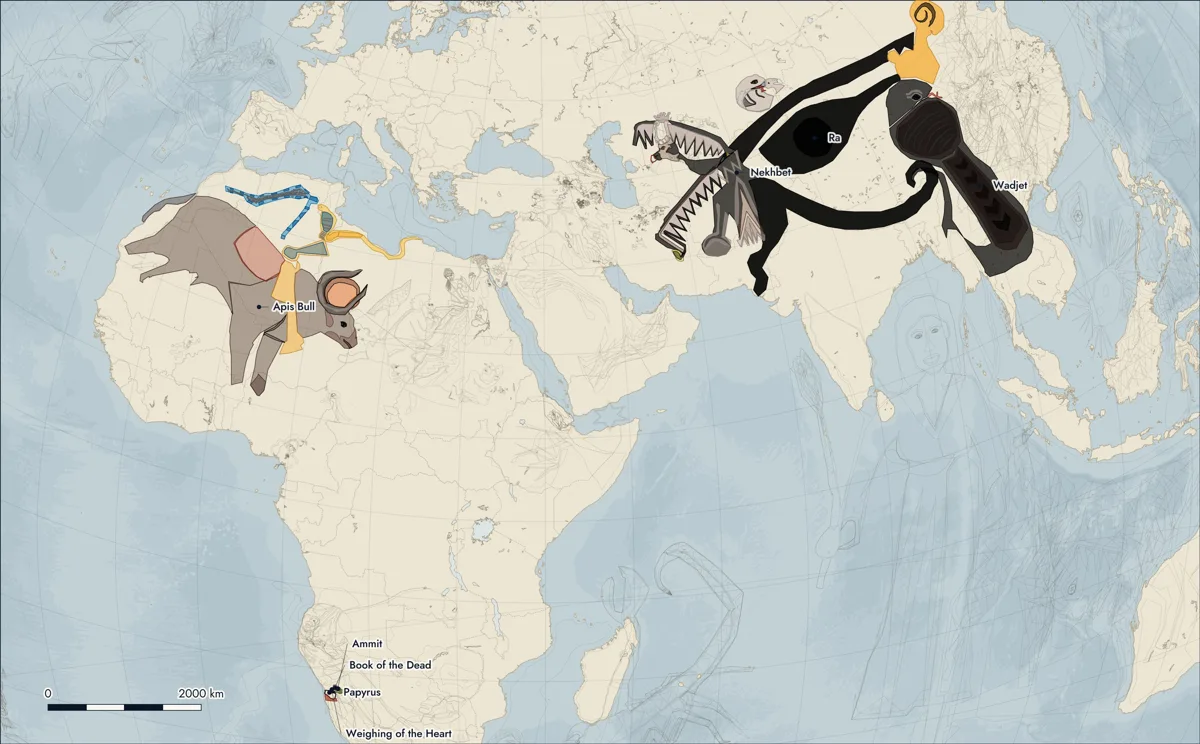
Cycle 9
Apis, Wadjet, Nekhbet and other figures of the Egyptian tradition.
10 works · 233 placemarks · 4,741 vertices
From the Plates
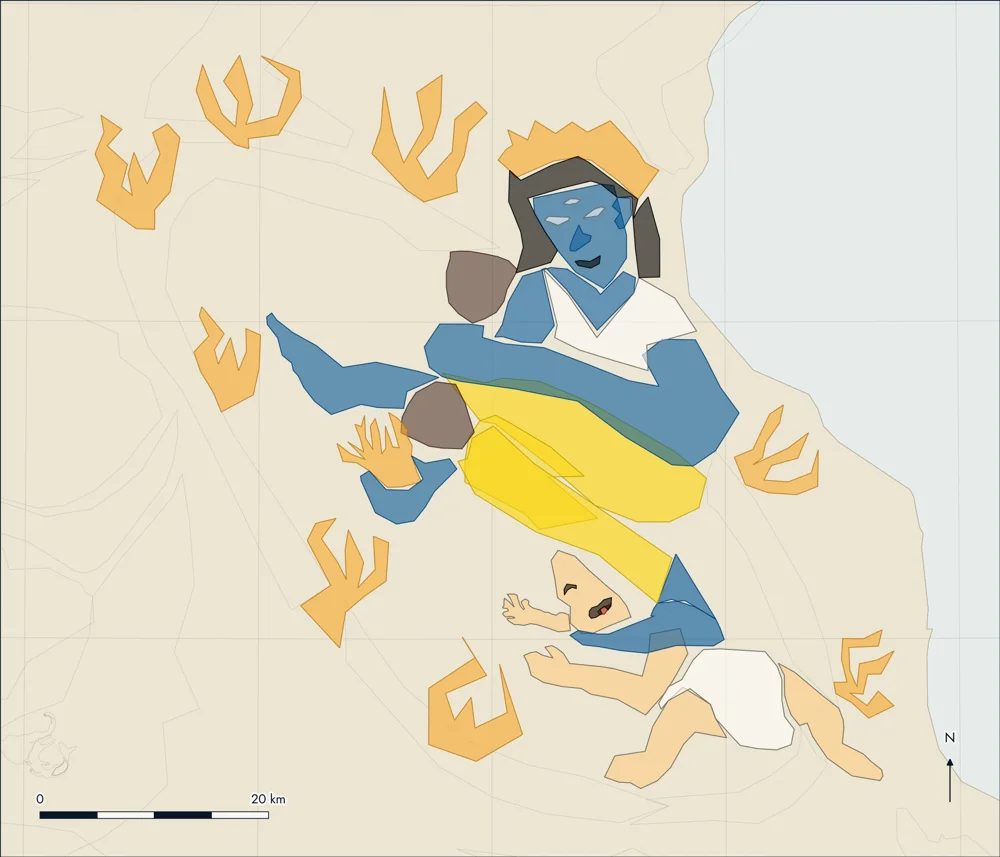
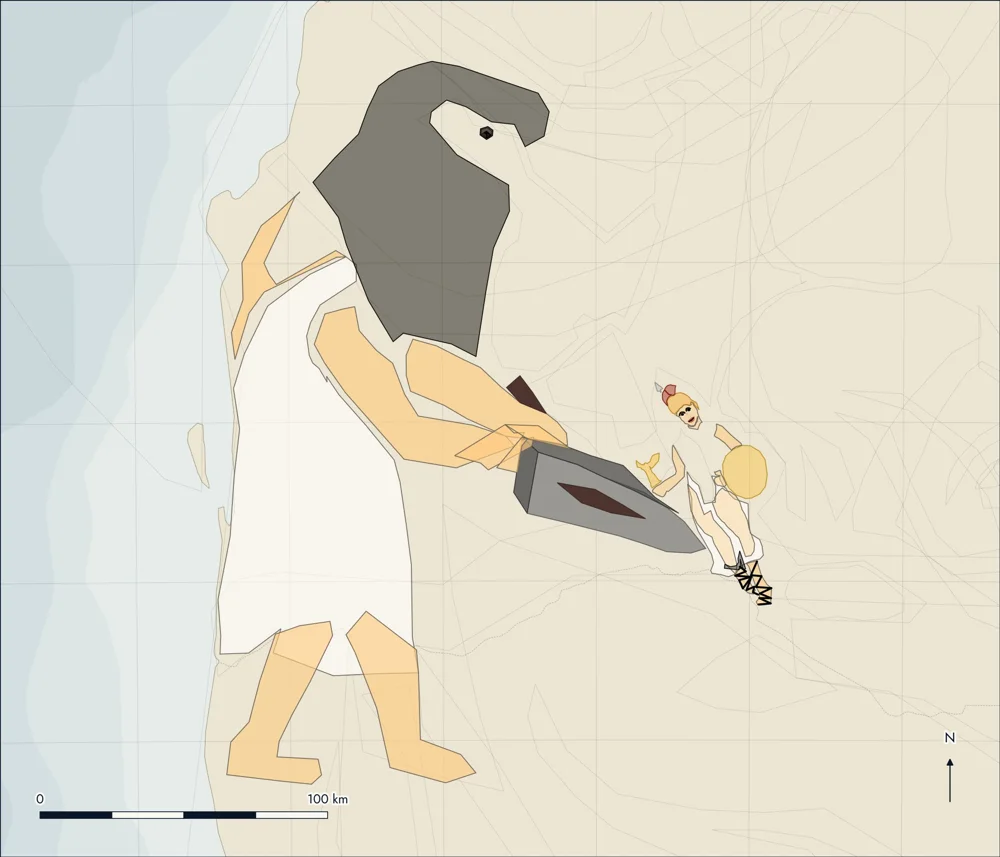
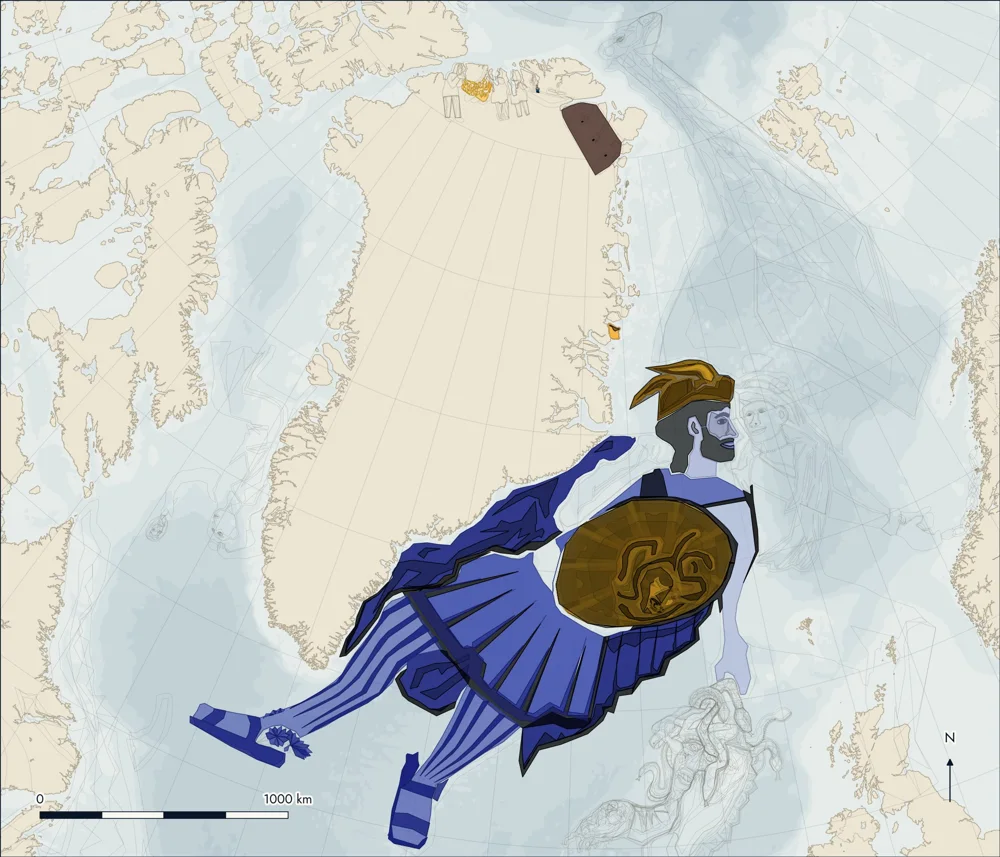
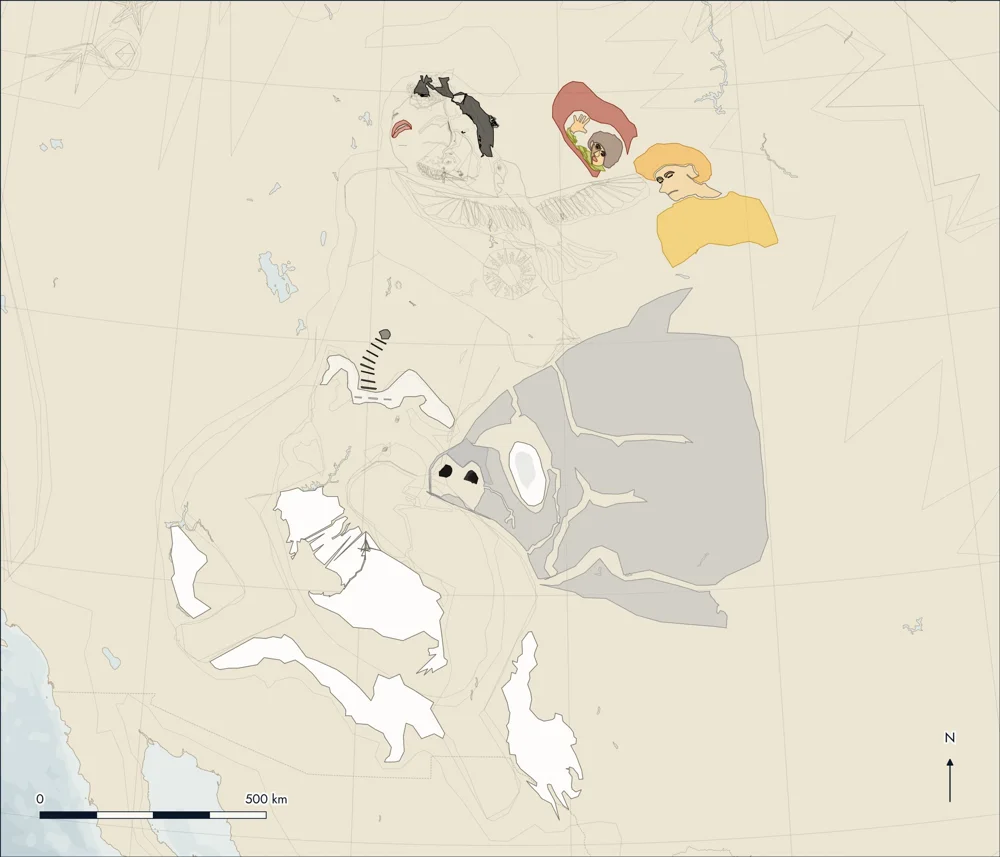
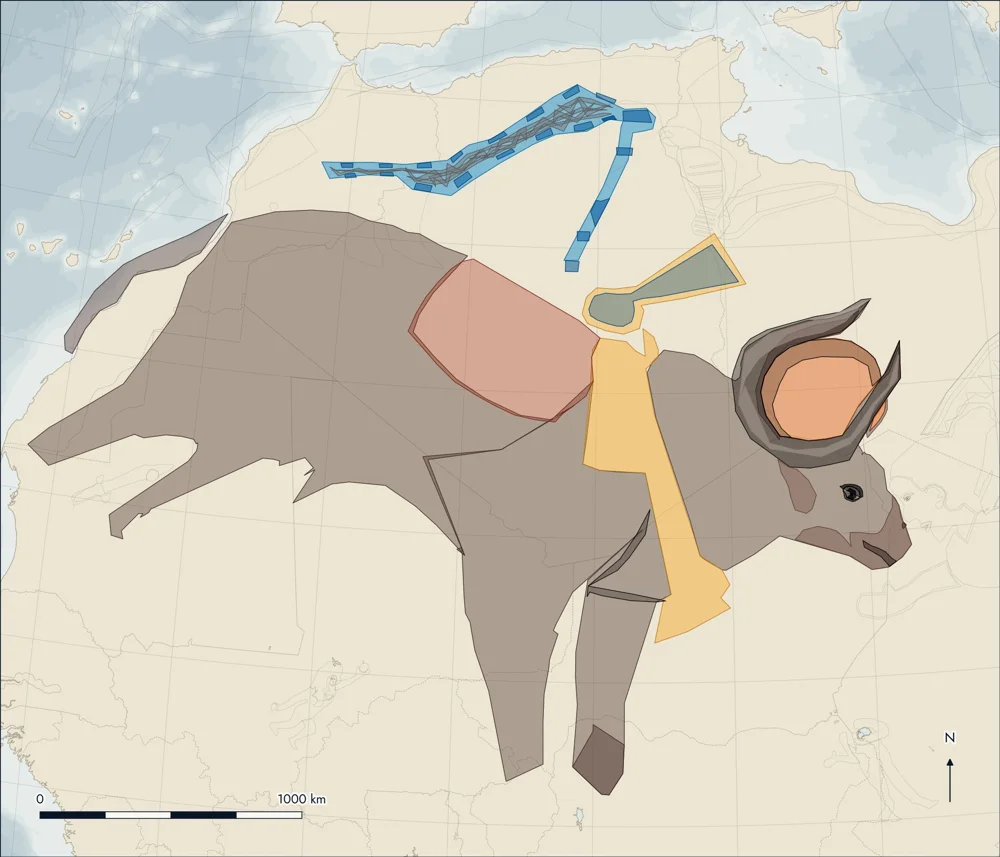
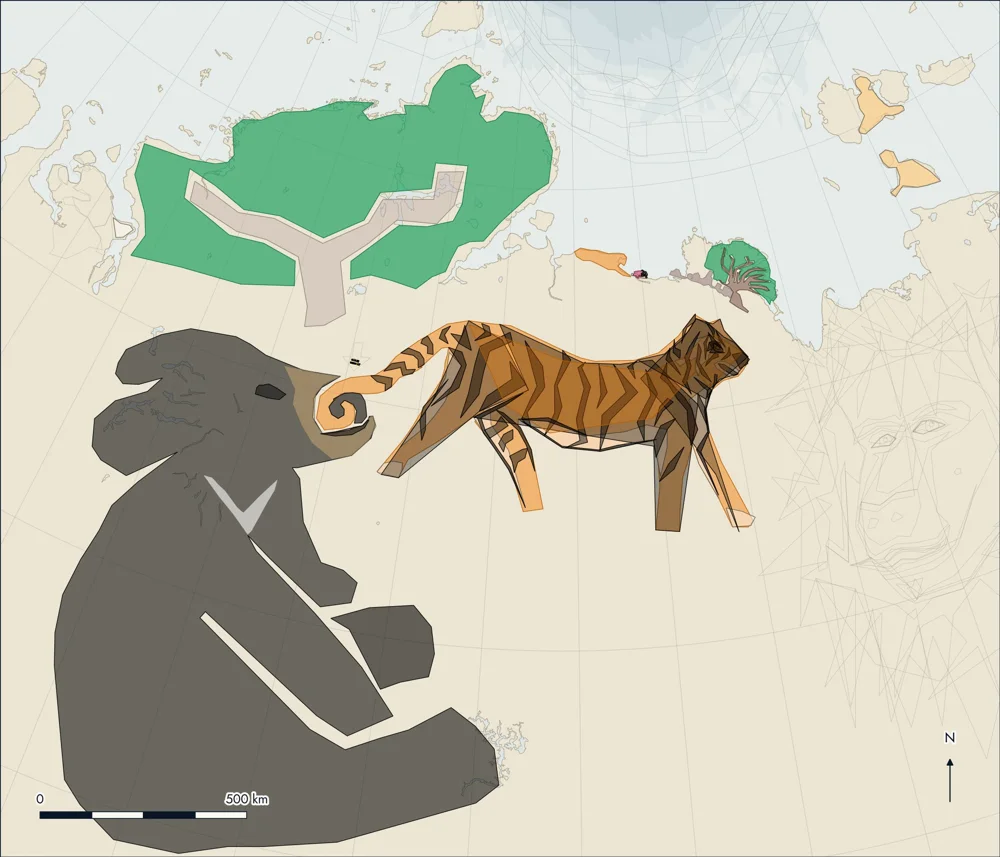
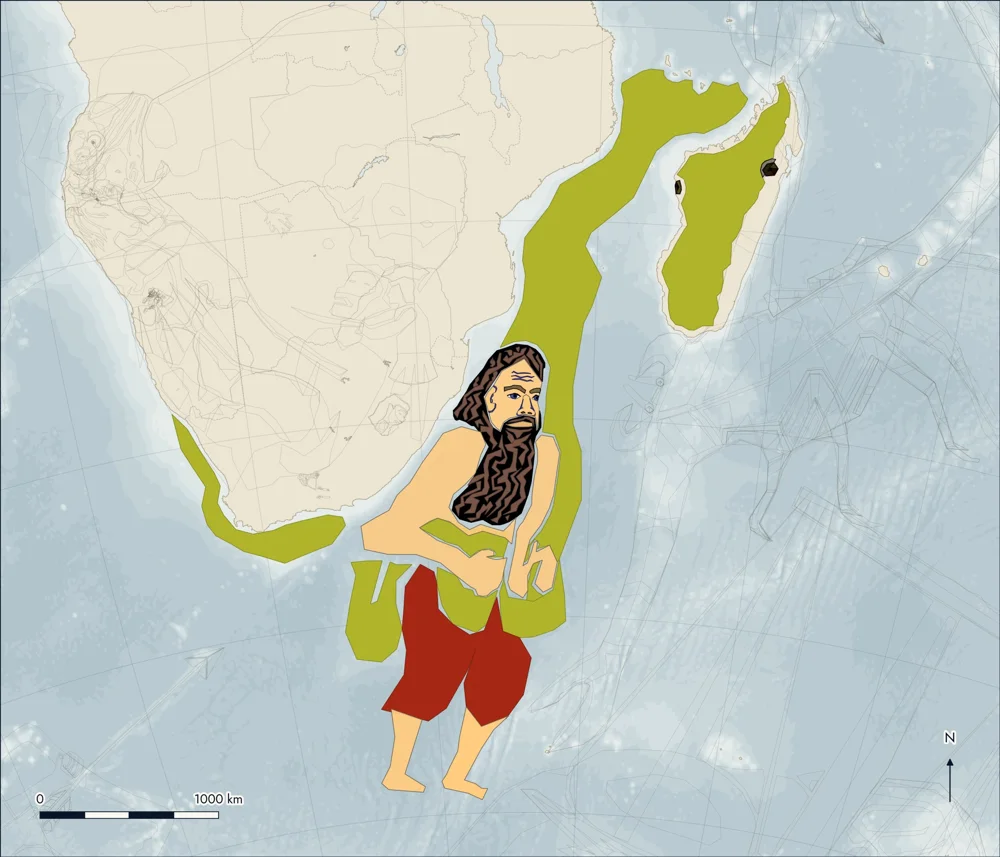
How to Cite
The catalogue
Couch, B. (2026). Heaven on Earth: As Above, So Below. A Cultural-Cartographic Corpus: Catalogue and Atlas. Atlanta, GA: A2A World LLC.
The artistic research
Couch, B. (2024). Heaven on Earth: As Above, So Below. Research Catalogue. https://doi.org/10.22501/rc.3032777
The Living Map
The catalogue is a fixed edition. The Storybook is the working map, where the figures can be explored at any scale as the corpus continues to grow.
© A2A World LLC 2026 · An interpretive work of art and a work in progress
Open the Storybook full screen →The corpus is a work of art and a practice of perception. It is not a historical or scientific claim.
Each figure is the product of a particular observer, at a particular time, choosing to see. Every tradition holds equal standing.
© A2A World LLC 2026